
10 Best Franchise Website Designs

Franchise websites face a very unique set of challenges that most single-location brands never encounter and have to overcome. With franchise websites, they must balance national brand consistency with local relevance and reach. This means the support of hundreds or thousands of locations. Also, they all must perform well in search results that are inherently local and high-intent.
A well-designed franchise website is not just visually appealing, but is designed as a scalable system. It must support local SEO, guide users toward meaningful actions, and remain manageable for internal teams over time.
The franchise websites featured below stand out because they solve these challenges seamlessly. Each example demonstrates a different way to connect strong branding with local performance all while you continue maintaining operational efficiency at scale.
As a team that specializes in building high-performing franchise and multi-location websites, Arc4 evaluates these examples through a strategic lens, not just a design one. Our work focuses on scalable architecture, local SEO frameworks, and conversion-driven user experiences that support both national brand consistency and localized performance.
Having designed and optimized franchise website systems across multiple industries, we understand how to structure sites that grow with the brand, reduce operational complexity, and consistently perform in competitive local search environments.
What Defines a High-Performing Franchise Website?
Before reviewing individual examples, let’s take a moment to separate what makes a strong franchise website from an average one.
Across industries, the most effective franchise websites share several common traits:
A Clear, Unified Brand Strategy and Identity
Users should immediately understand who the brand is, regardless of which page they land on. It is less about being a large national brand and more about maintaining a consistent voice, visual identity, and core messaging across the entire site. When branding elements remain cohesive across location and service pages, the experience feels intentional, trustworthy, and easy to recognize. This consistency reinforces credibility and ensures that local variations never dilute the overall brand identity.
Local Pages Built for Real Search Behavior
Franchise customers rarely search for brands alone. Instead, they search for services near them. Location pages must be designed to rank for local intent queries. They need to provide the information users expect.
Scalable Architecture and Templates
Franchise growth depends on repeatability. Templates and components must allow new locations to be added without reinventing the wheel or introducing SEO risk when creating them.
Conversion Paths That Match User Intent
Whether the goal is scheduling an appointment, placing an order, or finding a nearby location, the site must ensure all of the steps are easy and guide users quickly toward action.
Operational Efficiency
Behind every franchise website is a team managing content, updates, and performance to ensure success. The best sites reduce dependency on developers and avoid manual, location-by-location maintenance.
The examples below excel because they address these requirements holistically.
1. UPS Store
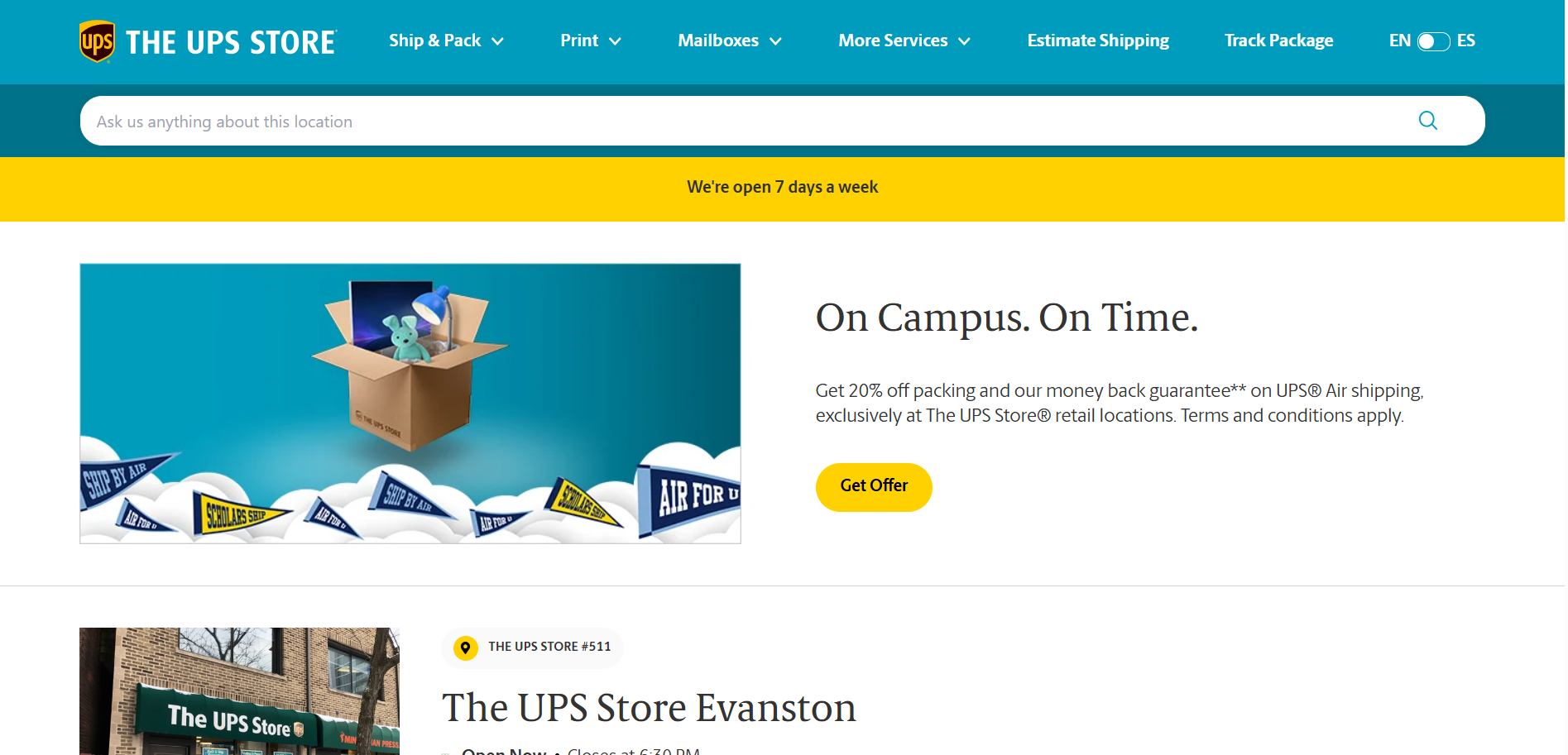
A Gold Standard for Scalable Local Pages
The UPS Store website delivers a functional, service‑focused experience that aligns with the brand’s role as a logistics and small business services network. From the homepage, users can quickly access core offerings: shipping, printing, mailbox services, and business solutions, with clear navigation paths that reduce friction for common tasks.
A prominently placed store locator combined with ZIP‑based search helps connect digital intent with physical locations, which is critical given the franchise model and reliance on in‑store fulfillment. Informational content about packing tips, business services, and print products supports browsing and decision‑making.
Despite these strengths, the website reflects limitations that constrain its effectiveness as a fully digital commerce platform. Pricing transparency is a notable pain point: many services (especially shipping and custom prints) require the user to contact a local store for quotes rather than providing instant, online pricing, which can create friction in the conversion funnel and reduce confidence for comparison shoppers. The experience can also feel fragmented and inconsistent because stores are independently owned; users may be redirected to locally managed pages that vary in design and information quality.
Additionally, the site leans heavily on in‑person service completion rather than robust digital self‑service or automation workflows, which makes it less competitive with logistics and print providers that offer real‑time rates, instant checkout, and account‑based management features. Those factors combined can make the experience feel more like a brochure with contact options than a modern transactional platform, especially for users seeking end‑to‑end online fulfillment.
Here’s a quick look at where the website succeeds and where it falls short:
| Highlight | Details | |
|---|---|---|
| Pro | Clear Service Navigation | Guides users quickly to core tasks like shipping, printing, and mailbox services, reducing friction for high-intent visitors. |
| Pro | Strong Local Store Integration | A robust store locator and location-specific pages connect online research with in-person service, which is critical for a franchise network. |
| Pro | Broad Service Visibility | Clearly communicates the full range of offerings, from packing and shipping to marketing print and small business solutions. |
| Con | Limited Pricing Transparency | Many services require contacting a store for quotes, creating uncertainty that can lower conversion confidence; reviews often mention cost surprises. |
| Con | Fragmented User Experience | Because locations are independently owned, users may find inconsistent information or redirects to local pages of varying quality. |
| Con | Weak Digital Self-Service Depth | Compared to modern logistics platforms, the site relies on in-store completion rather than fully online transactions or automated workflows. |
2. Restoration 1

Designing for Urgency Without Losing Structure
Restoration 1 website delivers a purpose‑driven and reassuring digital experience tailored to users facing home damage emergencies. From the moment a visitor lands on the homepage, the messaging emphasizes 24/7 availability, rapid response, and a broad scope of restoration services (water, fire, mold, and storm damage).
Visual cues, icons, and process descriptions help demystify what can be an emotionally stressful situation, and the site’s structure, with clear service categories, educational content, and straightforward contact CTAs, supports both immediate action and informed decision‑making. Prominent Find a Location and Contact Us calls to action help convert visitors into local service engagements, which is critical for a franchise‑based emergency services business.
However, the digital experience also reflects limitations common in service‑centric franchise models. While the site effectively communicates service breadth and urgency, it offers limited pricing transparency or online self‑service functionality, meaning users often still need to call or visit a local center to get detailed estimates or scheduling confirmations.
Additionally, because Restoration 1 operates through independently owned and operated locations, the consistency of the post‑site experience (responsiveness, follow‑through, quality of service) is not fully controlled or signaled on the website, which can introduce variability in customer satisfaction that external review sites often reflect. In summary, the site excels as an informational and lead‑generation platform for urgent restoration needs, but its effectiveness in fostering confidence and reducing friction in the decision journey is partly constrained by its offline service model and lack of transparent digital conversion tools.
Here’s a quick look at where this restoration franchise website succeeds and where it falls short:
| Highlight | Details | |
|---|---|---|
| Pro | Clear Emergency Value Proposition | The site immediately communicates 24/7 availability and core services (water, fire, mold), aligning well with urgent, high-intent user needs. |
| Pro | Strong Local Conversion Path | Prominent “Find a Location” and ZIP-code search features make it easy for users to connect with nearby franchise operators quickly. |
| Pro | Credibility Signals & Partnerships | Insurance logos, certifications, and process steps reinforce trust and position the brand as an experienced restoration provider. |
| Con | Limited Pricing or Scope Transparency | Users cannot easily estimate costs or service scope online, which may create friction during an already stressful situation. |
| Con | Franchise Experience Variability | Because services are delivered by independently owned locations, the website cannot fully guarantee a consistent customer experience across markets. |
| Con | Basic UX & Educational Depth | Compared with top competitors, the site offers relatively light educational content, interactive tools, or digital self-service features that could improve engagement and lead qualification. |
3. FASTSIGNS
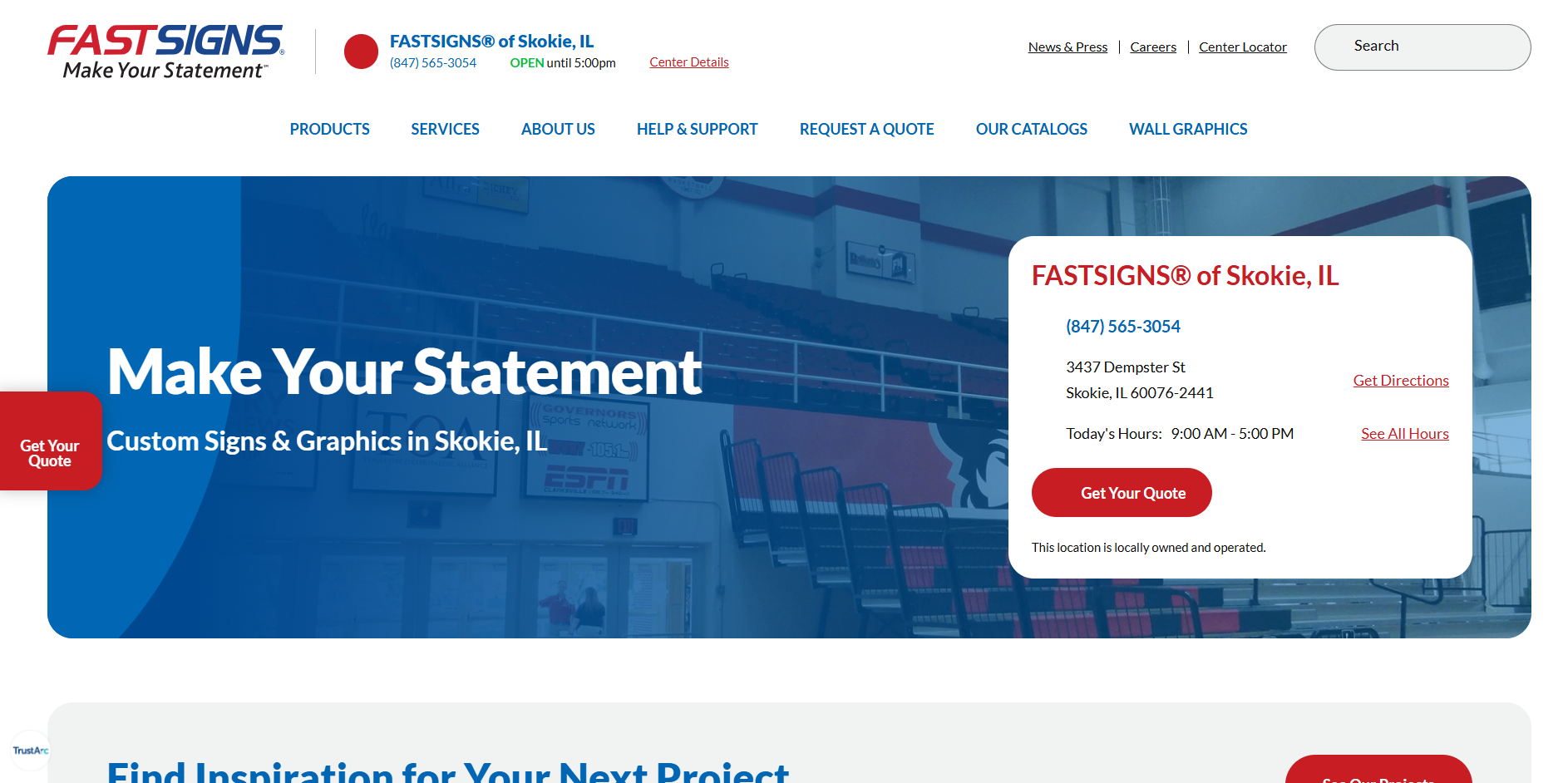
Local Customization With Strong Brand Control
FASTSIGNS website delivers a professional, business‑oriented experience that mirrors the company’s positioning as a full‑service visual communications partner. From the homepage, users can clearly see the breadth of offerings — from custom signs and graphics to digital signage and branding solutions — with service categories that help guide both commercial and small business audiences toward relevant solutions.
Navigation is structured to support exploration, with educational content about products and industries served, which helps users understand use cases and potential value. Prominent calls‑to‑action like Find a Location and Request a Quote anchor the conversion funnel, reflecting the reality that most sign projects are consultative and customized rather than off‑the‑shelf purchases.
However, the website also reflects the complexity inherent in a broad, custom services business, which can introduce friction for some users. The volume of product and solution categories, while comprehensive, may feel dense to first‑time visitors who are unsure where to begin, and there is limited interactive price transparency or e‑commerce functionality to support immediate online transactions. Instead, the site funnels most users toward a conversation with local centers, which is appropriate for a franchise model but adds steps and dependency on offline engagement.
Additionally, because FASTSIGNS operates through independently owned centers, the online experience can vary in consistency and responsiveness once users transition from the corporate site to local contact, meaning digital engagement does not always translate uniformly into customer satisfaction across markets.
Pros
- Comprehensive Service Positioning
The site clearly communicates end-to-end capabilities including design, project management, installation, and digital signage, positioning the brand as a full visual communications partner rather than just a printer. - Strong B2B Value Messaging
Content emphasizes business outcomes like brand visibility, customer engagement, and location “findability,” which aligns well with commercial buyer intent. - Effective Local Conversion Path
Prominent “Find a Location” and quote CTAs support lead capture across the large franchise network with 750+ locations worldwide.
Cons
- Limited Pricing or Instant Ordering
Most projects require consultation or quotes rather than transparent pricing or e-commerce workflows, adding friction for smaller or urgent jobs. - Franchise Experience Variability
Because services are delivered through independently owned centers, customer experience and responsiveness can vary by location, which reviews sometimes reflect. - Dense Navigation & Product Complexity
The breadth of products and services can make it harder for first-time users to quickly identify the right solution without guidance.
4. Great Clips
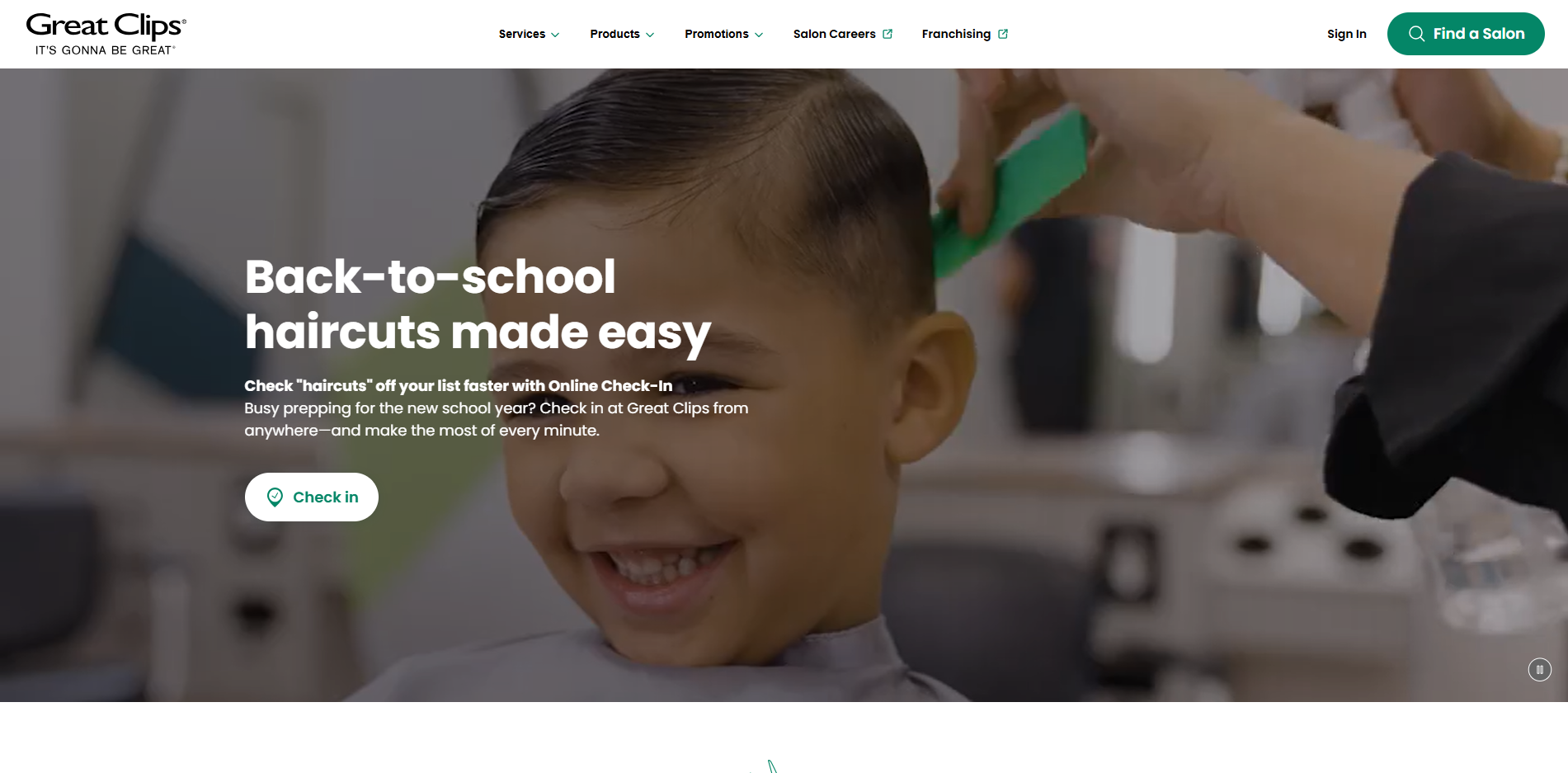
A Conversion-First Local Experience
Great Clips website offers a user experience that prioritizes speed, convenience, and clarity, mirroring the brand’s core service promise. From the homepage, users are directed toward the key conversion action: Online Check‑In, which enables them to join a salon’s waitlist before arriving, reducing in‑store wait time. Menu categories like Services, Find a Salon, and Look Book are easy to navigate, and the overall visual hierarchy helps users quickly identify options (e.g., haircuts by age group, salon locators, and stylist resources).
High‑level service descriptions and inspirational hairstyle galleries provide value for prospective clients who want ideas and confidence before visiting a location. This simplicity supports fast trust building and aligns with the needs of on‑the‑go customers.
Despite its strengths in clarity and task focus, the site does exhibit limitations that can narrow its appeal and effectiveness. One notable area is the lack of full appointment booking or advanced personalization — the digital experience revolves around waitlist check‑in rather than true, scheduled appointments with selected stylists, which many customers now expect from modern service platforms.
Additionally, pricing transparency is limited; visitors must often select a specific salon to view accurate service costs, adding steps and potential friction to the conversion funnel. Because Great Clips operates as a network of franchise locations, experience consistency varies by salon, an external factor that isn’t fully addressed by the website, yet it significantly impacts customer satisfaction and perception of the online experience.
Pros
- Strong Convenience & Online Check-In UX
The site clearly promotes Online Check-In with real-time wait visibility, aligning well with the brand’s speed and convenience positioning. - Clear Service Segmentation
Navigation by men, women, kids, and seniors simplifies decision-making and supports broad household targeting. - Helpful Inspiration & Education Features
Tools like the digital “Look Book” provide hairstyle ideas and maintenance guidance before visiting a salon, improving pre-visit confidence.
Cons
- Limited Pricing Transparency
Pricing details are minimal or location-dependent, requiring users to select a salon or visit in person to understand total cost. - Franchise Experience Variability
Because locations are independently owned, the website cannot fully ensure consistent service quality across markets. - Low Personalization or Booking Depth
The experience focuses on waitlist check-in rather than true appointment scheduling, stylist selection, or advanced customization, which some users expect from modern salon sites.
5. Terminix
Enterprise SEO Without Duplication
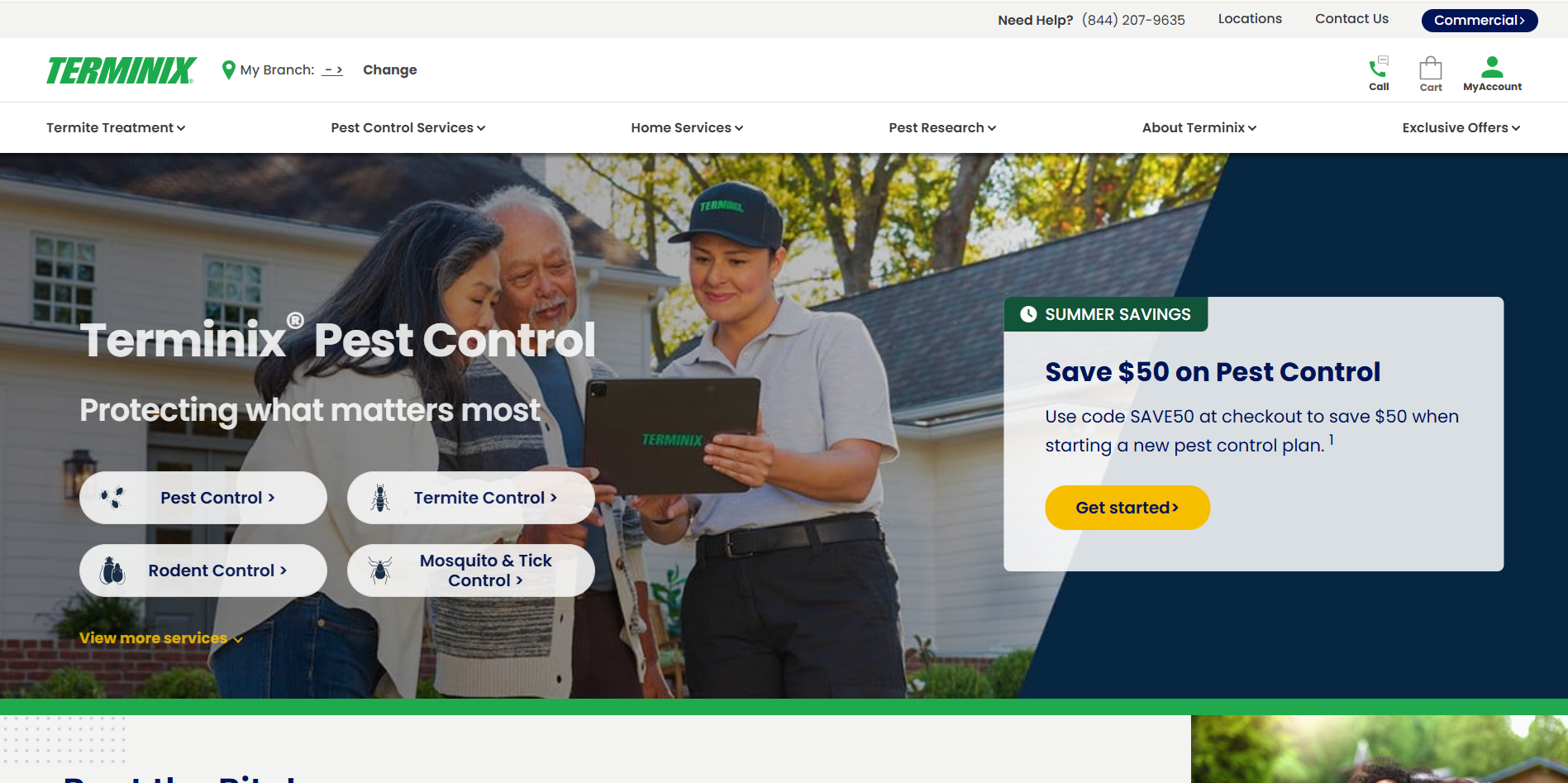
Terminix website delivers a professional and education‑driven digital experience designed to support homeowners seeking pest control and termite services. From the moment users land on the homepage, the value proposition emphasizes industry tenure, free inspections, and treatment guarantees, which helps establish credibility for a service category that often carries anxiety and uncertainty.
The site organizes service categories (termites, general pests, wildlife, moisture control) clearly, offers educational content about pest behavior and prevention, and includes strong call‑to‑action elements like Schedule a Free Inspection or Get a Quote, which guide users toward conversion without needing deep technical knowledge. Terminix also uses location detection to tailor service availability and contact options, adding relevance and immediacy to the user journey.
However, the website experience also reflects some inherent complexity and potential friction. The breadth of services and supporting content can create navigation overload for users who just want a quick answer or appointment, requiring multiple clicks to drill down into specific solutions. Additionally, while the online interface positions Terminix as a trusted provider, real‑world customer feedback from independent review platforms frequently cites issues with pricing transparency, responsiveness, and post‑service follow‑up, factors that don’t originate on the website but heavily influence overall brand perception and trust in the digital channel. As a result, users may approach the site with skepticism that extends beyond its informational quality, meaning digital messaging and UX design must work harder to reassure and convert wary prospects.
Pros
- Strong Trust & Authority Positioning
The site emphasizes 95+ years of experience, guarantees, and free inspections, which builds credibility and reduces perceived risk for homeowners. - Clear Service Education & Scope
Content explains pest problems, treatment methods, and prevention strategies well, helping users understand value beyond a simple extermination visit. - Prominent Lead Conversion Paths
“Schedule inspection” and quote CTAs are highly visible throughout the experience, supporting strong lead generation and funnel progression.
Cons
- Limited Pricing Transparency
Most services require consultations or quotes rather than upfront pricing, which can create friction for comparison-shopping users. - Navigation Complexity Across Services
The wide range of pest, termite, and home services can make it harder for users to quickly find the exact solution they need without multiple clicks. - Brand Perception Influenced by Reviews
Customer feedback across review platforms frequently cites billing, scheduling, and communication issues, which can impact trust regardless of website quality.
6. Childcare Network
Building Trust Through Local Content Depth
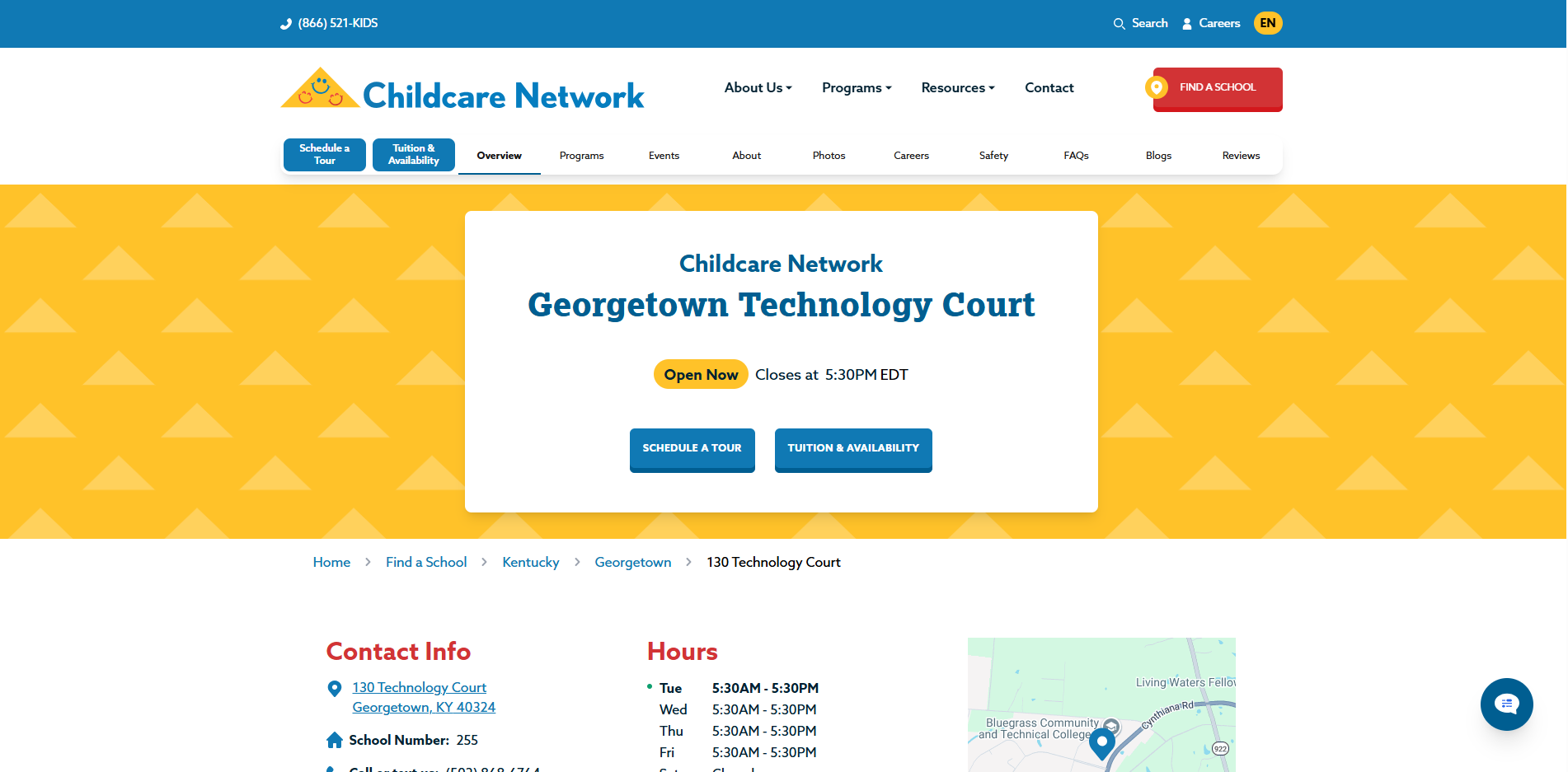
Childcare Network delivers a family‑oriented and informational experience that clearly reflects its mission as an early‑learning and daycare provider. Home and program pages emphasize safety, nurturing environments, and developmental programs for ages from infants through school‑age, presenting structured curriculum details and the value of day‑to‑day learning in accessible language.
Prominent calls‑to‑action like Find a School and Schedule a Tour guide parents toward next steps, and the site reinforces its purpose as a resource for exploring age‑appropriate offerings and enrolling in local centers. This design supports parents’ core needs when researching childcare options, helps set realistic expectations about the educational focus, and integrates tools like location search and tours into the navigation flow.
However, because the brand operates a network of locations rather than a centralized childcare operation, some experience variability that isn’t fully reflected on the site itself. Online communities and independent reviews suggest that while many centers receive praise for caring staff and communication with families.
There are also occasional reports of challenges related to staffing consistency, responsiveness, and center‑specific operational differences, issues that extend beyond the website but can affect overall perception and trust. Additionally, the site doesn’t prominently feature transparent pricing or real‑time availability, which means parents often still need to contact centers directly to understand costs and openings, adding steps in the decision journey.
Pros
- Family-Focused Messaging & Trust Signals
The site clearly emphasizes safety, nurturing environments, and educational development, which aligns well with parent decision drivers and builds emotional confidence. - Clear Program Structure by Age Group
Programs are segmented from infants through school-age care, making it easy for parents to quickly identify relevant offerings and progression paths. - Strong Conversion Path to Tours & Locations
Prominent “Find a School” and “Schedule a Tour” CTAs support local lead generation and simplify the next step for prospective families.
Cons
- Limited Pricing Transparency
Tuition details are typically location-specific and require contacting a center, which creates friction for cost-sensitive parents comparing options. - Franchise-Like Experience Variability
With hundreds of centers across multiple states, experience consistency may vary by location, which the website cannot fully address. - Differentiation vs Competitors Could Be Stronger
Messaging focuses heavily on care and nurturing (industry standard) but less on unique differentiators such as curriculum outcomes, measurable results, or technology advantages.
7. Pizza Hut
Local SEO That Drives Immediate Action
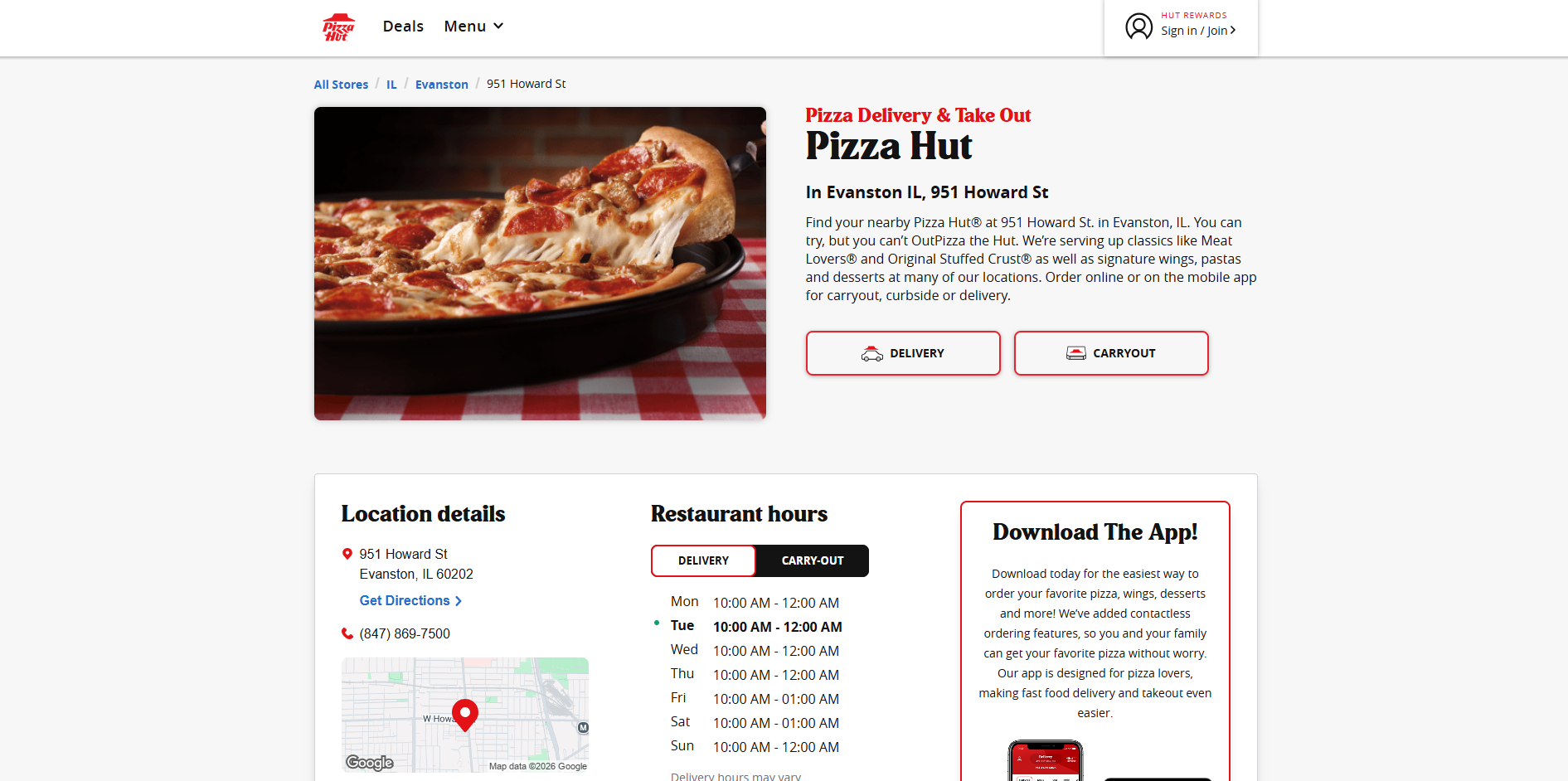
Pizza Hut’s website experience centers on online ordering, menu exploration, and deal promotion, core features for one of the largest global pizza chains. The interface prominently displays menu categories, current promotions, and Order Now CTAs, supporting quick conversion for users who are ready to place pickup or delivery orders. When everything works smoothly, customers can access location‑specific pricing, customize items, and take advantage of discounts through the site’s responsive design across devices. It functions as the primary digital storefront for the brand’s food offerings and aligns with modern expectations for a quick‑service restaurant.
However, real‑world user experience feedback reveals significant friction that undermines the website’s effectiveness. Independent reviews and community discussions frequently cite persistent technical issues such as slow load times, ordering glitches, cart problems, and difficulty completing checkout, concerns that span both the website and its app.
Many customers report errors in the online ordering process, confusion with deals/rewards applications, and poor responsiveness from support, which together contribute to dissatisfaction and reduce trust in the digital channel. This feedback suggests that while the site’s core transactional goals are clear, its execution and reliability still frustrate many users and can negatively impact overall brand experience.
Pros
- Strong Online Ordering & Deals Visibility
The site prioritizes ordering with prominent CTAs, bundles, and promotions, making it easy for users to convert quickly once they land on the page. - Location-Based Personalization
Integrated store locator functionality allows users to find nearby restaurants, view hours, and access local pricing or deals in just a few steps. - Broad Menu Exploration
Menus are visually organized with customization options, add-ons, and upsells that support higher average order value and cross-selling.
Cons
- Navigation & UX Friction
Users report confusing menu hierarchies and limited filtering/search capabilities, which can slow down the ordering process. - Performance & Reliability Concerns
Customer feedback across review platforms frequently mentions glitches or ordering issues, which can negatively impact trust and conversions. - Limited Brand Differentiation on Site
The website focuses heavily on transactions rather than storytelling, brand experience, or quality differentiation compared to competitors.
8. Good Feet Store
High-Intent Pages Built Around Appointments
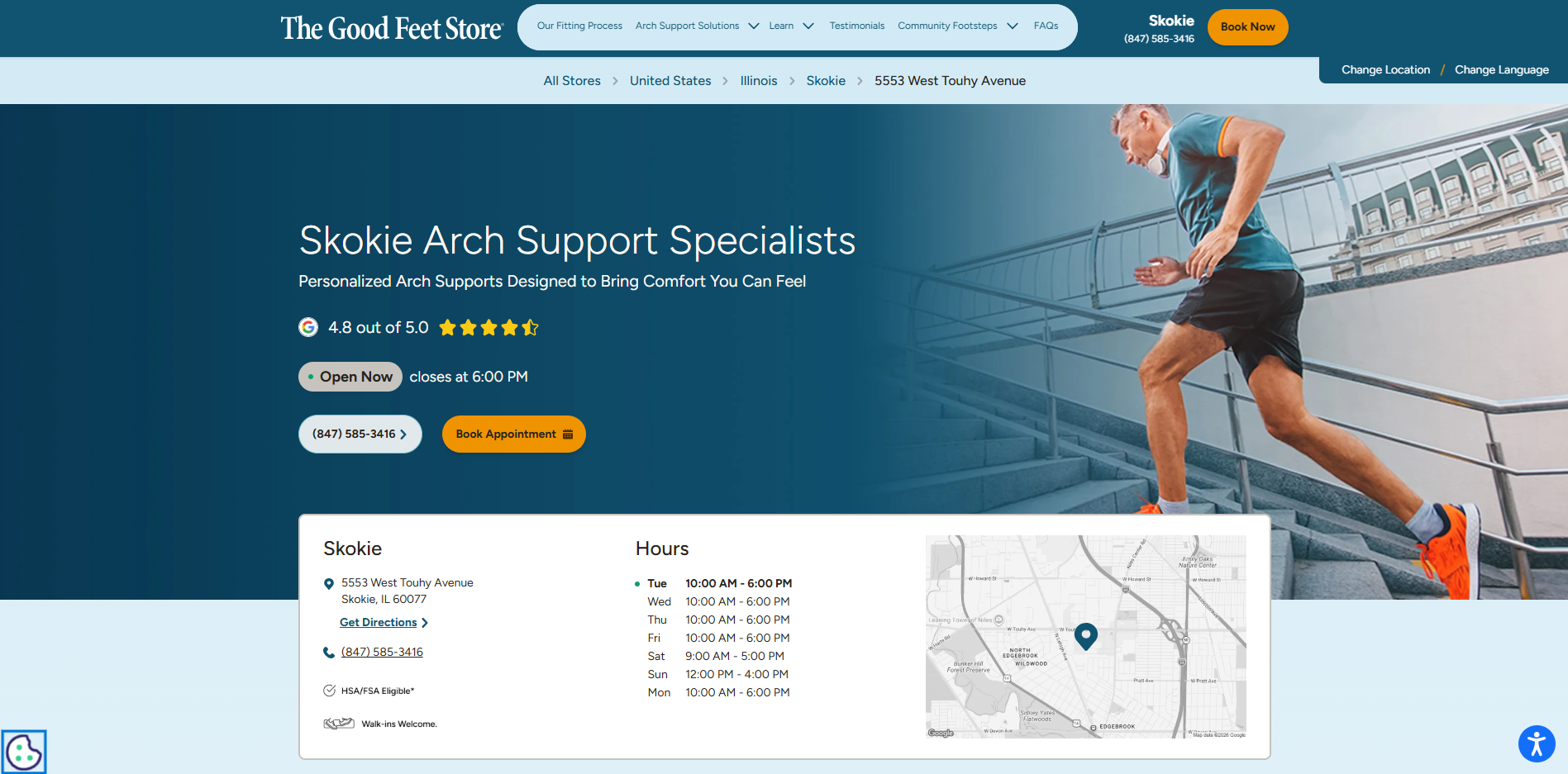
The Good Feet Store website delivers a straightforward informational experience centered on arch support products and the brand’s fitting services rather than direct e‑commerce. The homepage and primary pages are structured to explain the concept of personalized arch support, emphasize the availability of in‑store fittings, and guide users toward finding a local Good Feet Store for a consultation.
However, the overall user perception of the brand and its online presence is mixed, and that dynamic affects the broader website experience. External review platforms show predominantly negative feedback about customer service, pricing transparency, and perceived aggressiveness of sales tactics, which can undermine trust even if the site itself is technically solid.
Many customers report frustration with high costs, unclear refund or return policies, and variability in product effectiveness, issues that aren’t resolved by the website but influence user confidence before any in‑store interaction. Additionally, regulatory reviews have challenged some of the pain‑relief claims associated with Good Feet’s products, which may further complicate how visitors interpret promotional messaging on the site.
Pros
- Clear Value Proposition & Process
The homepage explains the arch support system and offers a free personalized fitting with steps that guide users on what to expect, helping set user expectations. - Focused Lead Conversion
Prominent ZIP code lookup and “Book Now” scheduling CTAs make it straightforward for visitors to find a local location and initiate contact. - Secure & Established Website
The site uses HTTPS and presents a long‑standing brand presence focused on foot support products, which helps with basic trust signals for visitors.
Cons
- Limited Online Purchasing Options
Products aren’t sold directly on the site — users must book in‑store services for fitting and purchase, which adds friction vs. direct‑to‑consumer e‑commerce. - Mixed Customer Reputation
External review sources show significant customer dissatisfaction with pricing, effectiveness, sales tactics, and refund policies, which can negatively influence perception of the brand and site credibility. - Lack of Expert Accreditation on Site
The site implies health benefits but doesn’t clearly distinguish between general fitting staff and licensed medical practitioners, which can raise questions about professional legitimacy.
9. Taco Bell
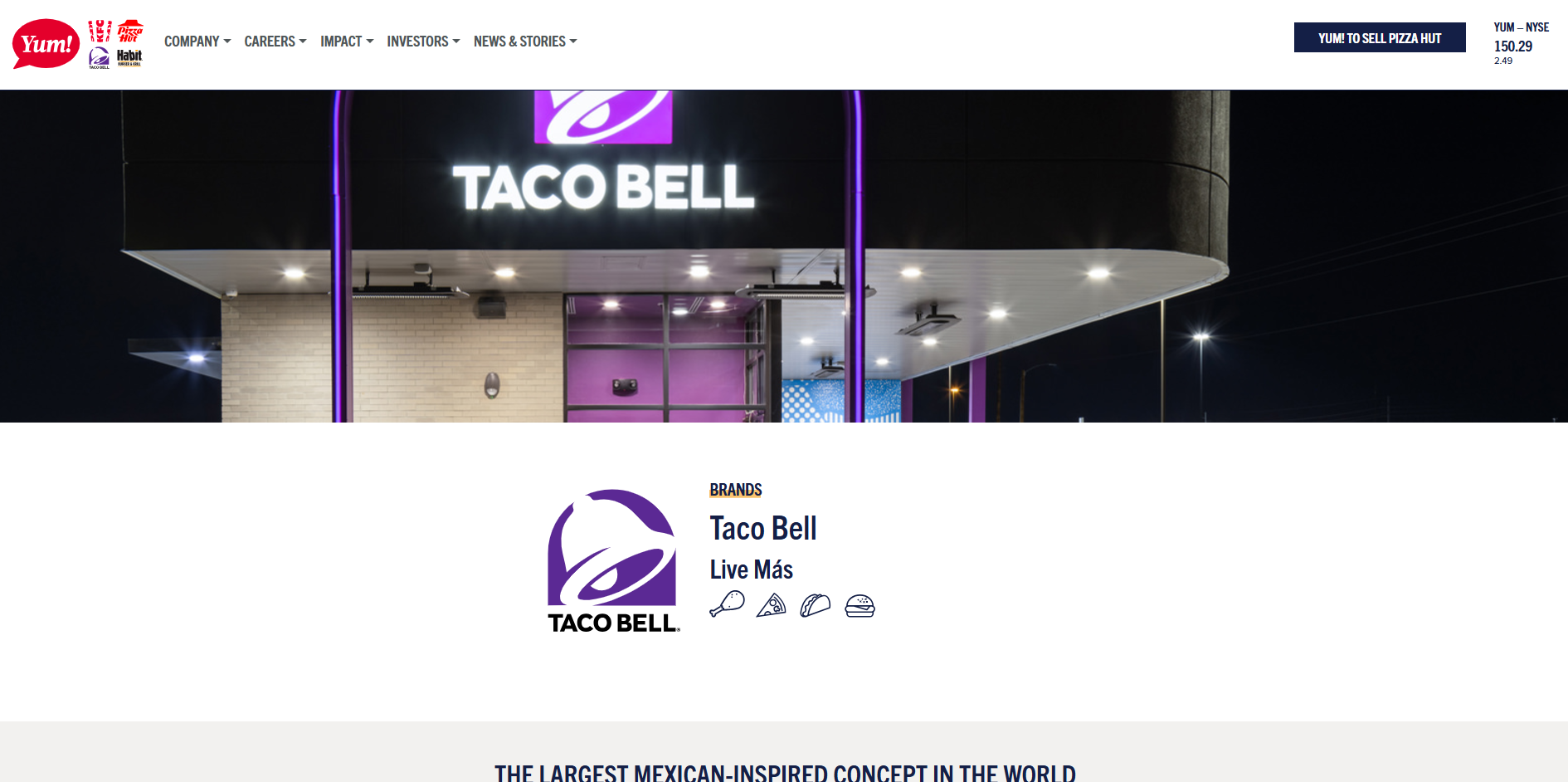
Conversion-Focused Local Experience at Scale
Taco Bell’s website delivers a recognizably branded online experience focused on menu exploration, online ordering, and promotions. It’s structured to support quick conversion: menus are visually organized with clear categories and customization options, and CTAs like Order Now, Deals, and Find a Store are prominently displayed to reduce friction in the ordering process.
The platform also integrates location‑based personalization that adjusts delivery/pickup options and pricing based on the user’s area, and nutritional information is readily available for those interested. The site itself is secure and legitimate, offering responsive navigation across devices and basic support paths for customers.
However, the overall user experience exhibits friction points, particularly around online ordering reliability and customer support follow‑through. Third‑party reviews and community discussions indicate frequent complaints about order errors, slow or failing order placement, and challenges with payment or reward redemption, issues that extend beyond the website into the broader digital ordering ecosystem (app + web).
While these concerns are not strictly about the Taco Bell site’s interface design, they impact perceived website effectiveness because users expect seamless transaction flows after navigating menus and initiating orders. Additionally, the sheer volume of promotional content, deals, and upsells on the main pages can feel cluttered, making it harder for some visitors to quickly find exactly what they want without distraction
Pros
- Prominent Ordering & Deals CTAs
The homepage highlights “Order Now,” current promotions, and combo deals front and center, making it fast for users to transact with minimal clicks. - Strong Menu Visualization
High‑quality food photography and clear item categories help users quickly explore offerings and make choices. - Integrated Store Finder & Personalization
Location tools tailor menus, pricing, and pick‑up/delivery options based on the user’s area, improving relevance and conversion.
Cons
- Navigation Can Feel Cluttered
With multiple promo banners, upsells, and options (order, app, rewards), users may find it hard to immediately locate what they need. - Limited Filtering in Menu Browsing
The menu experience lacks robust filters (e.g., dietary preferences or build‑your‑own search), which can slow decision‑making. - Occasional Performance/Checkout Friction
Users report occasional slow loading or checkout interruptions, which can reduce conversions and frustrate visitors.
10. Valvoline Instant Oil Change
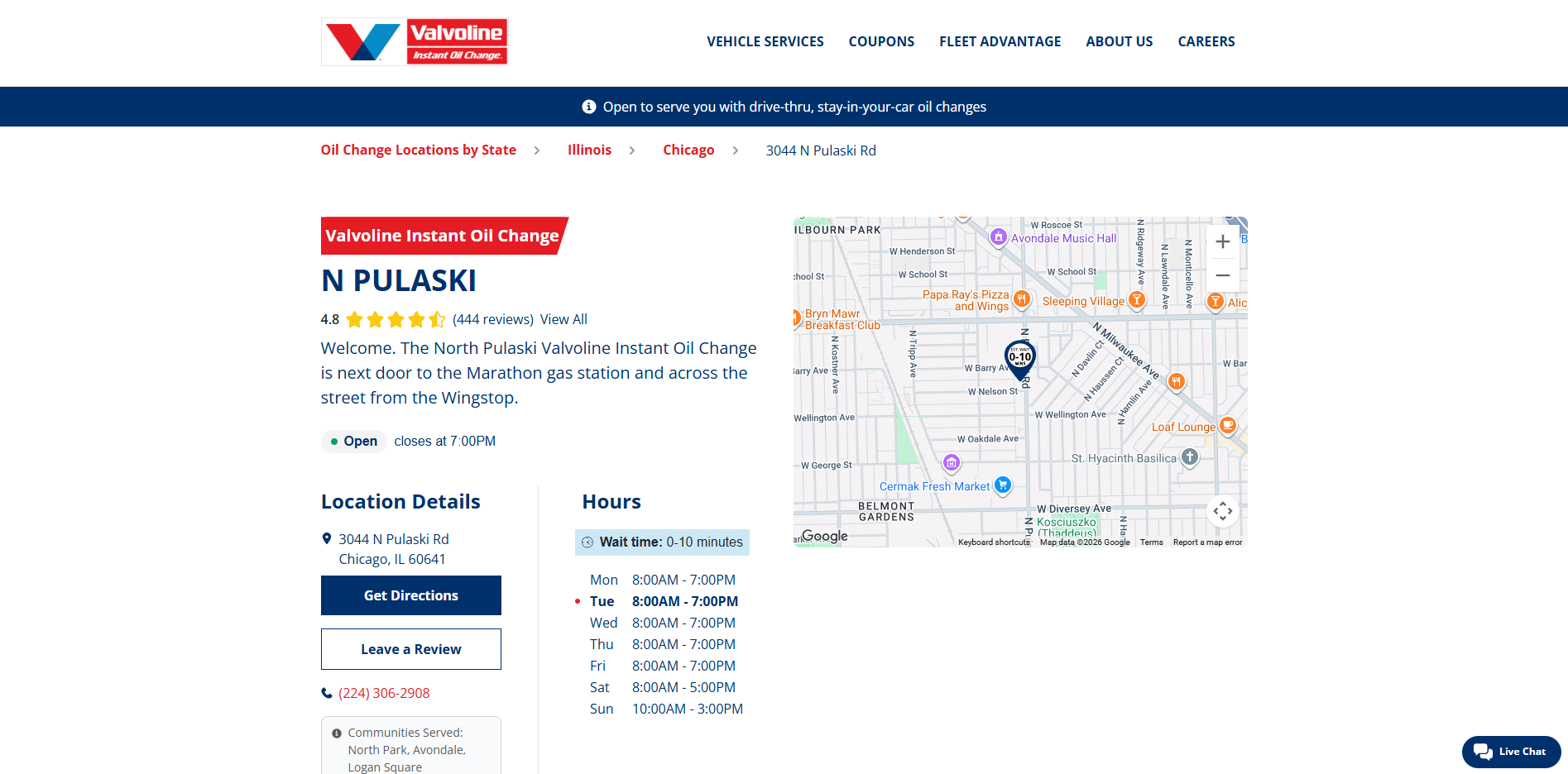 Personalization at Scale for Urgent Searches
The Valvoline Instant Oil Change website experience is straightforward and utilitarian, emphasizing quick preventive maintenance services like oil changes, filter replacements, and other light vehicle care. Its primary digital purpose is to help users locate nearby service centers, communicate basic offerings, and provide scheduling/contact options, which aligns with the “convenience” promise of a quick‑lube business model.
However, online reputation and customer feedback introduce notable friction in the overall experience. Independent review platforms show a high proportion of negative service reviews, including complaints about pricing transparency, perceived upselling, and issues with service quality or communication resolution.
These third‑party experiences can undermine trust in the online brand experience and deter users from engaging further with the site’s calls to action. While some customers do report positive interactions, the volume of negative feedback suggests that the digital impression created by the website may not fully match customer expectations once they engage in person, which can impact conversions and repeat engagement.
Pros
- Clear Automotive Service Focus
The site’s purpose is straightforward: help users find oil change and maintenance services, explain what’s offered, and support scheduling or location lookup. - Established & Secure Domain
VIOC has a long‑standing domain (since 1997) and uses HTTPS, which supports basic trust and secure browsing. - Informative Educational Content
Content outlines the importance of preventive maintenance and provides information about various services available, helping users understand value beyond just a transaction.
Cons
- Low Customer Review Ratings
Independent customer feedback for VIOC and its services is predominantly negative on multiple review platforms, with many complaints about pricing, service quality, and upselling, which can undermine site credibility. - Limited Online Self‑Service Features
The website primarily drives visitors to in‑person service scheduling and doesn’t offer comprehensive online transactions beyond appointment lookup. - Mixed Trust Signals Online
Although technical checks show basic safety, some reputation checkers caution users to verify legitimacy and data practices before submitting personal information, indicating that the site’s trust footprint isn’t uniformly strong.
What Franchise Brands Can Learn From These Examples
Across all of these sites, a few patterns consistently emerge:
- Local pages are treated as core conversion assets
- SEO is integrated into site architecture, not added later
- Templates enable scale without sacrificing quality
- Real local data improves trust and engagement
- Operational efficiency is a strategic advantage
The most successful franchise websites are built as systems, not collections of pages.
Final Thoughts on Best Franchise Website Designs
Design alone does not make a franchise website successful. Performance comes from aligning brand, architecture, SEO, and user intent into a single, scalable experience.
The examples above demonstrate that when franchises invest in the right foundation, they can grow nationally while winning locally, without creating unnecessary complexity for users or internal teams.
Building a franchise website that scales nationally while performing locally requires more than just a fairly good design.
Arc4 helps multi-location and franchise brands create SEO-driven, scalable digital systems that support growth without increasing operational complexity. If you’re rethinking how your franchise website performs, Arc4 can help.