
Local SEO for Multi-Location Brands
Top 3 Reasons to Optimize Your Local Landing Pages
Local landing pages play a major role in how customers find your brand, evaluate nearby locations, and decide whether to take action. For multi-location businesses, optimizing these pages can improve local SEO, strengthen user experience, and drive more calls, appointments, orders, and in-store visits.
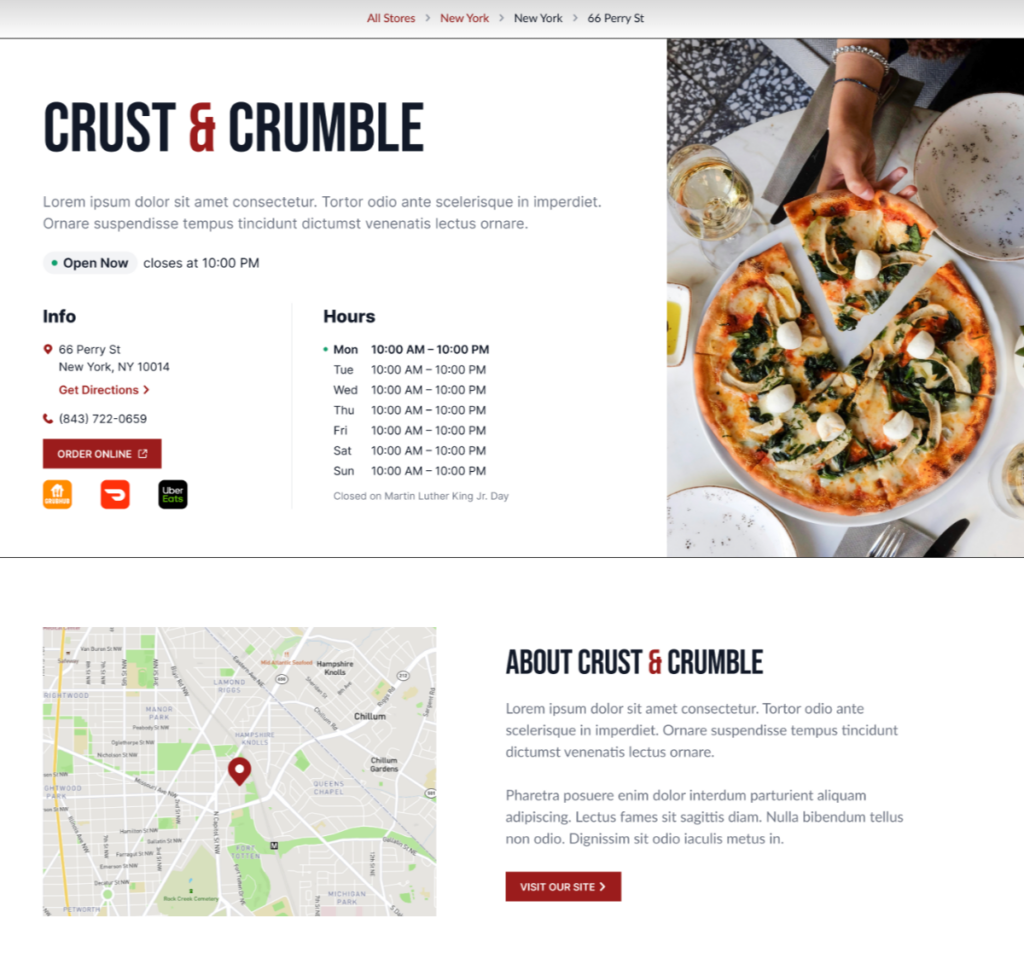
Are your local landing pages driving enough traffic to your stores, offices, clinics, or service areas? Are they optimized to rank for the products and services your brand is known for? Most importantly, are they built to turn local search traffic into real customer action?
If not, there is a good chance revenue is being left on the table.
For multi-location brands, local landing pages are often one of the most valuable assets on the site. These pages help search engines understand where you operate, help nearby customers find the right location, and help users take the next step. That could mean booking an appointment, calling a location, getting directions, placing an order, or visiting in person.
The challenge is that local landing pages are often treated like maintenance pages instead of growth pages. They get launched, lightly updated, and then pushed behind other marketing priorities. Over time, they become outdated, thin, or inconsistent across locations. That hurts both rankings and conversions.
When local landing pages are properly optimized, they can become a strong source of organic traffic, branded search performance, and local conversions across every market your business serves. If you want a deeper breakdown of strategy, content structure, and technical best practices, explore our complete guide to local landing pages.
Why Local Landing Pages Matter
A local landing page is more than a store details page. It is a local SEO asset, a conversion page, and often the first real interaction a customer has with a specific location.
High-performing local landing pages help brands show up for searches tied to city names, neighborhoods, service categories, and "near me" intent. They also help users quickly find the information they need, including hours, address, services, reviews, directions, FAQs, and the right next action.
For enterprise and multi-location brands, this becomes even more important. When each location page is optimized and structured well, the business can create a stronger local presence at scale without rebuilding the strategy market by market. That is exactly why brands invest in dedicated local landing page services that are designed to support both search visibility and conversions.
1. Location-Specific Content Helps You Rank and Convert
Search engines want to show users the most relevant result for their location and intent. That means generic brand pages often are not enough. If someone is searching for a service in a specific city or looking for a nearby location, Google is more likely to prioritize pages with strong local relevance.
That is where optimized local landing pages make a major difference.
A strong local landing page includes location-specific information that helps both search engines and customers understand what makes that page relevant. This can include the city or neighborhood served, store-specific offerings, localized service details, unique selling points, nearby landmarks, local promotions, and content tied to the actual experience at that location.
This matters for ranking, but it also matters for conversion. When customers land on a page that feels specific to their area and specific to what they need, they are more likely to trust the result and take action.
For multi-location brands, this is one of the biggest opportunities in local SEO. Instead of sending traffic to broad national pages, you can guide users to local landing pages that are better aligned with what they searched for and what they want to do next. For a deeper example of what this looks like at scale, see our case study on building local landing pages for a national pizza brand.
- Location name, address, phone number, and hours
- Location-specific services or products
- Unique content for the local market
- Relevant internal links
- Trust signals like reviews, FAQs, and local proof points

2. Better Page Experience Supports SEO Performance
Google does not just evaluate what is on the page. It also evaluates how the page performs.
If your local landing pages are slow, hard to use on mobile, cluttered, or difficult to navigate, they can struggle to perform in search and frustrate users after they arrive. That is a problem because most local searches happen on mobile devices, often with immediate intent.
Someone searching for a nearby location usually wants answers quickly. They may want to call, get directions, confirm hours, browse services, or complete a transaction right away. If the page loads slowly or hides the key information, that user may leave before converting.
Optimizing local landing pages means improving both technical performance and user experience. This includes fast load times, clear mobile layouts, easy-to-scan content sections, prominent store details, accessible navigation, readable typography, and structured layouts that help users find answers quickly.
These improvements do more than make the page look better. They make it easier for users to complete the action they came for. They also support stronger engagement signals, which can help your location pages perform better over time.
If you are not sure where your current local pages stand, a good next step is to start with a local SEO audit to identify technical issues, content gaps, and missed conversion opportunities across your location page footprint.
3. Strong CTAs Turn Local Traffic Into Customers
Getting traffic to your local landing pages is only part of the job. The next step is turning that traffic into action.
The best local landing pages are built around the intent of the user. Someone looking for a nearby healthcare provider may want to book an appointment. Someone searching for a restaurant may want to order online. Someone searching for a retail location may want directions, inventory, or store hours.
That means your call to action should match the immediate need of the visitor. Generic messaging often underperforms. Clear, relevant CTAs usually convert better.
- Book an appointment
- Call this location
- Get directions
- Order online
- View local services
- Schedule a consultation
- See availability
Good CTAs should be easy to find, easy to tap on mobile, and placed throughout the page where they make sense. They should not force users to hunt for the next step.
This is especially important for local landing pages because the user often arrives with high intent. They are not casually browsing. They are looking for a nearby solution. If your page gives them the right information and a clear action to take, conversion rates can improve significantly.
Many brands treat local pages like digital brochures. The better approach is to treat them like conversion pages that support search visibility and business outcomes at the same time.
What High-Performing Local Landing Pages Should Include
If you are evaluating your current location pages, here are some of the most important elements to review:
Strong Local SEO Signals
Unique title tags, meta descriptions, headings, internal links, and location-relevant content that align with how users actually search.
Clear Location Data
Accurate name, address, phone number, hours, and service details displayed clearly and consistently on every page.
Mobile-First Design
Responsive layouts, clear spacing, readable text, and easy access to primary actions on smaller screens.
Conversion Paths
Buttons and page elements that encourage users to call, book, order, visit, or contact the location.
Localized Content
Content that reflects the specific market, services, and needs of the local audience instead of repeating the same generic copy everywhere.
Scalable Page Management
A system that makes it easy to update location pages at scale without turning every content update into a manual project.
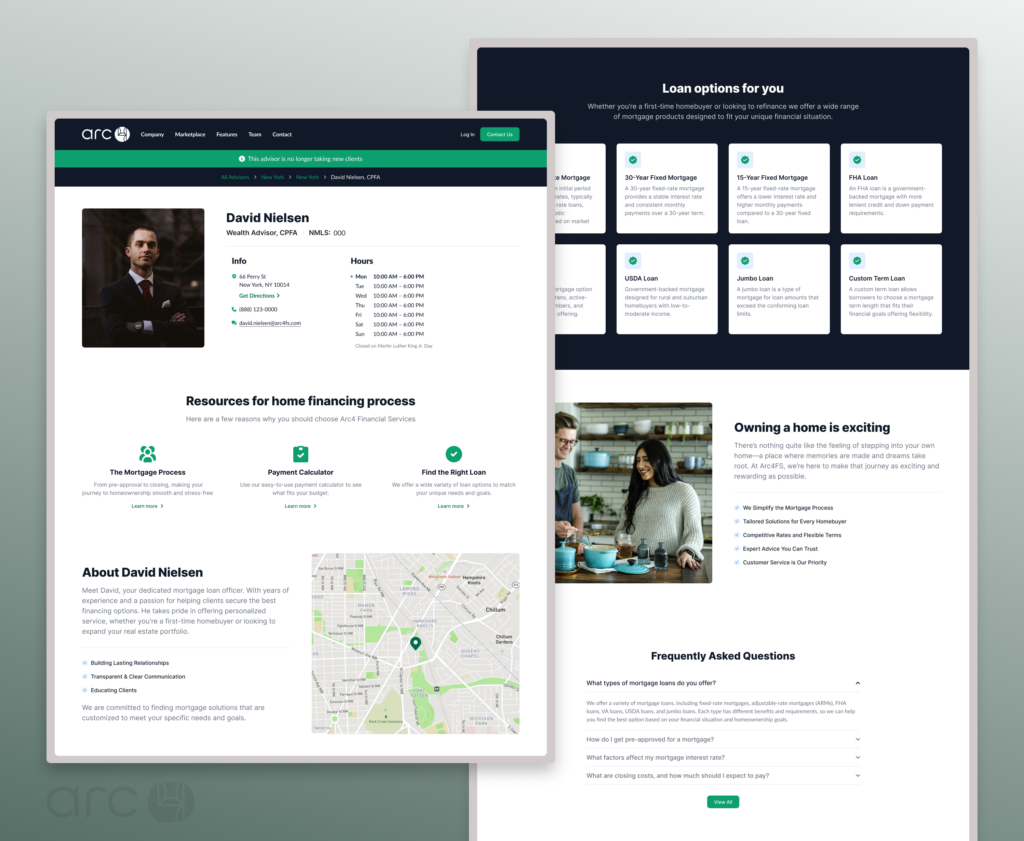
The strongest local landing pages balance SEO, usability, and operational efficiency. They are not just designed to rank. They are designed to help people act. If you want the full strategy playbook, including content structure, local SEO fundamentals, and page design considerations, read our complete guide to local landing pages.
How Arc4 Can Help Optimize Your Local Landing Pages
If your local landing pages are underperforming, the issue is usually not just one thing. It is often a mix of thin local content, weak page structure, poor mobile experience, outdated SEO practices, or a platform setup that makes updates difficult.
Arc4 helps multi-location brands improve local landing pages with a focus on both search visibility and conversion performance. That can include improving content structure, refining local SEO strategy, enhancing user experience, identifying the right integrations, and building a framework that is easier to manage over time.
For brands using Yext and similar platforms, Arc4 can also help create a more scalable approach to local page management, giving corporate teams better control while making it easier to keep local pages accurate, relevant, and aligned with business goals.
If you want a clear view of where your current opportunity is, request a local SEO audit. And if you want to better understand the bigger picture strategy behind high-performing location pages, explore our pillar guide to local SEO landing pages.
Final Takeaway
Local landing pages are one of the most important digital assets for multi-location brands. They support local SEO, improve the customer experience, and create clear paths to action for nearby users.
If your current pages are thin, slow, generic, or hard to maintain, optimizing them can create a meaningful impact across rankings, traffic, and conversions.
For brands that want stronger performance across every market, better local landing pages are a smart place to start.